Professional Clevis Manufacturer
Cangzhou Hanshun Electric Power Equipment Co., Ltd. was formerly known as Junye Electric Power Equipment Factory, established in 2007 and has a history of 18 years. It specializes in the production of transmission line hardware, distribution hardware, power station hardware, and power plant hardware.
-
![Z‑16100 Right Angle Clevis]() Z‑16100 Right Angle ClevisZ‑16100 Right Angle Clevis belongs to Z‑series steering connection hardware for overhead transmission and substation projects, nominal rated failure load reaches 160 kN.
Z‑16100 Right Angle ClevisZ‑16100 Right Angle Clevis belongs to Z‑series steering connection hardware for overhead transmission and substation projects, nominal rated failure load reaches 160 kN. -
![Z‑7 Right‑Angle Clevis]() Z‑7 Right‑Angle ClevisIn overhead power transmission and distribution projects, the reliability of every single connecting fitting directly governs the safety margin of the whole insulator string system. The Z‑7
Z‑7 Right‑Angle ClevisIn overhead power transmission and distribution projects, the reliability of every single connecting fitting directly governs the safety margin of the whole insulator string system. The Z‑7 -
![UB‑10 Clevis Hinge]() UB‑10 Clevis HingeWhen designing long‑term reliable overhead power transmission and distribution networks, every connecting component directly decides the overall safety margin of the whole line system. The UB‑10
UB‑10 Clevis HingeWhen designing long‑term reliable overhead power transmission and distribution networks, every connecting component directly decides the overall safety margin of the whole line system. The UB‑10 -
![Angle Direction Connecting Plate]() Angle Direction Connecting PlateAngle Direction Connecting Plate, widely named Z-type right angle hanging clevis plate, twisted clevis plate or L-shape steering connecting fitting in global power engineering industry, is a
Angle Direction Connecting PlateAngle Direction Connecting Plate, widely named Z-type right angle hanging clevis plate, twisted clevis plate or L-shape steering connecting fitting in global power engineering industry, is a -
![Z-shaped Right-angle Hanging Board]() Z-shaped Right-angle Hanging BoardThose involved in power line construction and power grid procurement encounter Z-type right-angle mounting plates almost daily. While not a large, unremarkable piece of hardware, and easily
Z-shaped Right-angle Hanging BoardThose involved in power line construction and power grid procurement encounter Z-type right-angle mounting plates almost daily. While not a large, unremarkable piece of hardware, and easily -
![Parallel Clevis]() Parallel ClevisParallel Clevis are core connecting hardware in high-voltage transmission lines. Composed of parallel steel plates, bolts, and locking studs, they are primarily used for connecting insulator strings,
Parallel ClevisParallel Clevis are core connecting hardware in high-voltage transmission lines. Composed of parallel steel plates, bolts, and locking studs, they are primarily used for connecting insulator strings, -
![Right Angle Hung Plate]() Right Angle Hung PlateRight-angle suspension plates (or right-angle hangers) are 90°angled plate-shaped connectors, using a single or double plate structure, and are assembled and fixed with bolts: the upper end is
Right Angle Hung PlateRight-angle suspension plates (or right-angle hangers) are 90°angled plate-shaped connectors, using a single or double plate structure, and are assembled and fixed with bolts: the upper end is -
![Hanging Board Z Type Clevis]() Hanging Board Z Type ClevisHanging Board Z Type Clevis are widely used connecting hardware in overhead transmission lines. They are made of high-quality carbon steel through stamping, precision punching, and overall hot-dip
Hanging Board Z Type ClevisHanging Board Z Type Clevis are widely used connecting hardware in overhead transmission lines. They are made of high-quality carbon steel through stamping, precision punching, and overall hot-dip -
![Galvanized Z Clevis]() Galvanized Z ClevisGalvanized Z Clevis are commonly used connecting hardware for overhead transmission lines. They are made of carbon steel or alloy steel, formed and then hot-dip galvanized, conforming to the ASTM
Galvanized Z ClevisGalvanized Z Clevis are commonly used connecting hardware for overhead transmission lines. They are made of carbon steel or alloy steel, formed and then hot-dip galvanized, conforming to the ASTM -
![Z-0780 Clevis]() Z-0780 ClevisThe Z-0780 connecting ring is a commonly used adapter hardware in the industry for low-voltage and medium-voltage lines. It has a rated breaking load of 70kN, a compact size, and flexible
Z-0780 ClevisThe Z-0780 connecting ring is a commonly used adapter hardware in the industry for low-voltage and medium-voltage lines. It has a rated breaking load of 70kN, a compact size, and flexible -
![Z-1080 Clevis]() Z-1080 ClevisThe Z-1080 connecting ring, also known as a Z-type right-angle mounting plate, is a fundamental connecting hardware in power transmission and transformation engineering. This component is mainly used
Z-1080 ClevisThe Z-1080 connecting ring, also known as a Z-type right-angle mounting plate, is a fundamental connecting hardware in power transmission and transformation engineering. This component is mainly used -
![Z-12100 Clevis]() Z-12100 ClevisThe Z-12100 connecting ring, also known as a Z-type right-angle mounting plate, is a universal corner connector manufactured strictly according to power connection hardware standards. With a nominal
Z-12100 ClevisThe Z-12100 connecting ring, also known as a Z-type right-angle mounting plate, is a universal corner connector manufactured strictly according to power connection hardware standards. With a nominal


Why Choose Us
Quality Assurance
We have professional personnel to monitor the production process, inspect the products and ensure that the final product meets the required quality level standards, guidelines and specifications.
Production Equipment
Cangzhou Hanshun Electric Power Equipment Co., Ltd. covers an area of 10,000 square meters. Large laser cutting machines, drilling machines, and punch presses.
Customized Services
We understand that each customer has unique manufacturing needs. That's why we offer customization options to cater to your specific requirements.
Sales Market
Until now, except the domestic sales, our products had exported to more than 50 countries, such as United States, Chile, Argentina, Peru, Bolivia, DominicaRepublic, Honduras, Nicaragua, Mexico, Philippines, Thailand, Vietnam, Myanmar, Indonesia, Palestine, etc.
Types of Clevis
Z Clevis
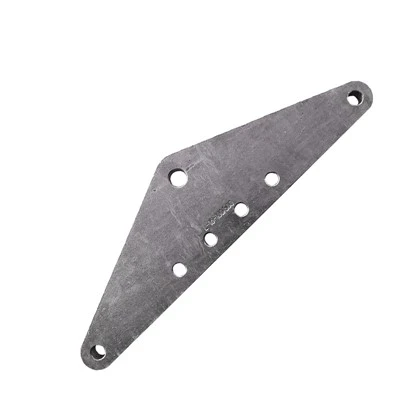
Z Clevis also known as right-angle Clevis, is mainly used for the combined connection of insulator strings and wire clamps in power lines.
01
PS Clevis
PS Clevis are key components for line connection and protection. They are used for assembling insulator strings and securing equipment on transmission lines.
02
PD Clevis
Pd Clevis is made of medium-thick steel plate, produced by stamping and cutting process, and is used to connect single plate with single plate, single plate with double plate, and can string suspension insulators and hang them on poles.
03
P Clevis
The size of the P Clevis is relatively small, and the overall structure is also very simple. It is usually a single-board structure, which is more suitable for some connection scenarios with relatively small loads and low space requirements.
04
UB Clevis
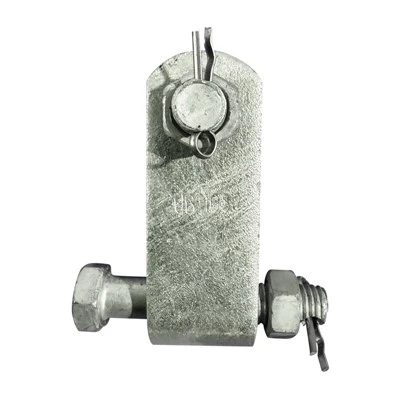
Ub Clevis is a commonly used connection hardware, used for rigid connection between insulator string and pole tower, cross arm or other hardware.
05
Specification
|
Name |
Model |
Dimension |
Failure Load |
|||
|
C1 |
C2 |
M |
H |
|||
|
Z-Type |
Z-0780 |
20 |
20 |
16 |
80 |
70 |
|
Z-1080 |
20 |
20 |
18 |
80 |
100 |
|
|
Z-12100 |
20 |
24 |
22 |
100 |
120 |
|
|
Z-16100 |
22 |
26 |
24 |
100 |
160 |
|
|
Z-21100 |
24 |
26 |
24 |
100 |
210 |
|
Advantages of Clevis
Versatility
One of the biggest perks of a clevis is its versatility. It can be used in a wide range of applications across different industries.


Easy Installation
Another great advantage is how easy it is to install a clevis. You don't need to be a professional engineer or have specialized tools to get the job done.
Adjustability
Clevises offer a high degree of adjustability. They allow you to change the length or angle of a connection, which is really useful in many situations.


Cost - Effectiveness
Clevises are a cost - effective solution for many connection needs. They are relatively inexpensive compared to other types of connectors, and their long lifespan means that you don't have to keep buying new ones.
Flexibility in Design
Clevises offer a lot of flexibility in design. They come in various shapes and sizes, allowing you to choose the one that best suits your needs.


Safety
Safety is always a top priority, and clevises contribute to a safer working environment. They provide a secure connection between components, reducing the risk of parts coming loose or falling off.
Material of Clevis
Steel
Steel is one of the most prominent options for clevis manufacturing. It comes in several grades, although alloy steel and carbon steel are the most popular variants here. While carbon steel is more prominent in standard applications, alloy steel is more noted for its strength.
Stainless Steel
With its resistance to staining and corrosion, stainless steel makes for a good clevis manufacturing material. These clevis work well in demanding and corrosive environments, and you can easily use different stainless steel grades for your application.
Aluminum
An aluminum clevis is light and doesn’t corrode. The fasteners are perfect when you need to consider weight, lending their build to applications like aerospace and aviation.
Application of Clevis
Linkage Systems
Clevises are commonly used in linkage systems where they connect rods, levers, or other components. This linkage allows for the transmission of force or movement between different parts of a machine.
Control Systems
In control systems, such as those found in aircraft or industrial machinery, clevises are employed to create adjustable connections. This enables precise control over the movement of control surfaces or other critical components.
Tie Rod Assemblies
Clevises are integral in tie rod assemblies, providing a secure and adjustable connection between the tie rod and other components. This is crucial in applications where tension or compression forces need to be managed.
Automotive Applications
Clevises find use in various automotive applications, including brake systems and suspension components. They contribute to the smooth and controlled movement of different parts within these systems.
Surface Treatments

Zinc Plating
Provides corrosion resistance and a clean, bright finish.
Passivation Treatment
Forms a passive film on the surface of the cladding, improving its corrosion resistance and coating adhesion.
Phosphating Treatment
Phosphating films can prevent metal corrosion to a certain extent and can also be used as a primer before painting to improve paint adhesion and corrosion resistance.
Oxidation Treatment
The raw materials are placed in an oxidizing solution to form a 0.5μm-1.5μm Fe₃O₄ film on the surface, which eliminates residual stress and reduces deformation.
Material Selection
To begin with, you need to decide on the material to use. This decision will be made based on your application requirements, and because there are so many options to choose from, you should be especially careful here.
Material Preparation
Take your chosen clevis material and process it. Most times, processing steps involve cutting the material into the right shape or length, all based on the clevis design.
Forming and Shaping
From there, the material is shaped based on the clevis. You can apply different methods for this, from machining and forging to cold-heading and more.
Machining and Threading
If the need arises, you need to implement threading and machining processes to create holes and threads in the clevis.
Heat Treatment
Quenching, annealing, and other steps will be needed, although be sure to only use the heat treatment steps that work with the material and can deliver the required hardness and strength.
Finishing and Surface Treatment
Some instances can also require additional surface treatments such as coating and plating. These help to optimize corrosion resistance and performance and they will involve adding coats such as chrome, zinc, and others.
Quality Control and Inspection
Quality inspectors implement quality control procedures at every stage of the manufacturing process. These procedures ensure that your products meet your required standards and specifications.
Installation Best Practices
Choose the Correct Size & Type
Ensure compatibility in diameter, length, and load rating.
Inspect for Damage
Check for burrs, corrosion, cracks, or deformation.
Use Lubrication
Prevent seizing and ease installation.
Ensure Alignment
Misaligned holes can damage the clevis or reduce function.
Apply Correct Torque
Avoid under- or over-tightening.
Secure the retaining mechanism
Must be fully seated.
Customization Process
Communicate Needs
We engage in in-depth discussions to understand your requirements and expectations. Provide us with the specifications you require.
Develop Solutions
We create custom adjusting plate solutions based on your needs, providing detailed designs and plans.
Contract Confirmation
We confirm design plans and contract details together to ensure shared understanding.
Manufacturing & Delivery
We start the manufacturing process and oversee progress to ensure timely production and delivery.
Final Acceptance
Together, we conduct the final acceptance to verify that the adjusting plates meet your quality standards and requirements.
Ongoing Support
After delivery, we provide maintenance and technical services to ensure long-term reliability. This helps keep your adjusting plates in optimal condition.
Shipping and Delivery
|
Lead Time |
Usually we can ship within 7-15 days for small quantity,and about 30 days for large quantity. |
|
Payment Term |
T/T,Western Union,Alipay,MoneyGram,and Paypal.This is negotiable. |
|
Shipping Method |
It could be shipped by sea,by air or by express(EMS, UPS, DHL, TNT, FEDEX and ect). Please confirm with us before placing orders. |
|
Packaging Details |
Packed in sponge+paper box+export wood cases,or according to your requirements. |
Video
FAQ
We're well-known as one of the leading clevis manufacturers and suppliers in China. If you're going to buy cheap clevis, welcome to get pricelist from our factory. All customized products are with high quality and low price.
PS type Clevis, UB 12 type Clevis, Z 16100 Clevis