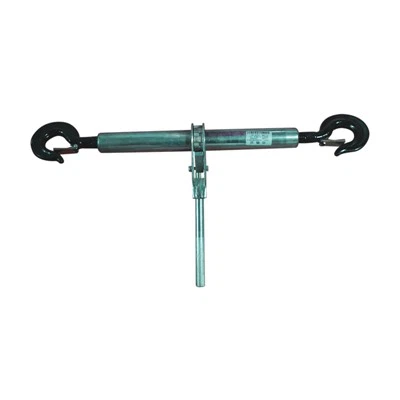
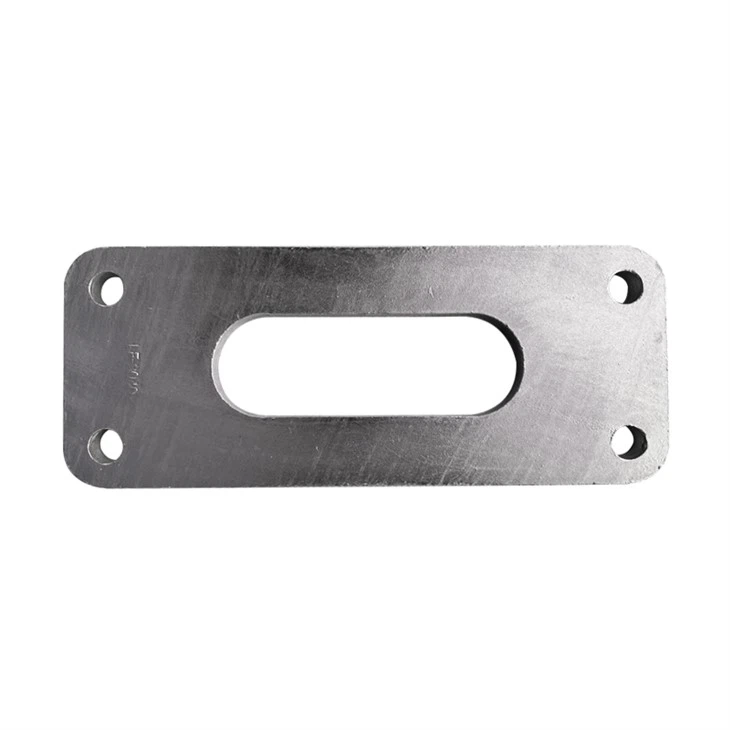
The core production process of hot-dip galvanized yoke plates revolves around "substrate processing → surface pretreatment → hot-dip galvanizing → post-treatment → inspection and shipment". Each step requires strict control over precision, cleanliness, and coating quality to ensure the mechanical properties, corrosion resistance, and compatibility of the connecting plates. The specific steps are as follows:
Substrate selection: Based on the voltage level (110kV/220kV/500kV/UHV) and rated load of the connecting plate, select low alloy high strength steel plates or forgings that meet the standards such as GB/T 700 (Q235) and GB/T 1591 (Q345) to ensure that the tensile and shear strength of the substrate itself meets the standards (avoiding later fracture due to defects in the substrate).
Material cutting: Using CNC flame cutting, plasma cutting, or laser cutting, the steel plate is cut into blanks according to the shape (rectangular, triangular, Y-shaped, etc.) of the connecting plate design drawings. Key requirements: The cutting edges must be flat, free of burrs, cracks, or oxide residue, and the dimensional error must be controlled within ±1mm (to ensure the accuracy of subsequent processing).
Stamping: For thick plates or types with high stress requirements, the blanks after cutting need to be placed in a forging press or stamping press and formed by die forging to refine the internal grains of the metal and improve the overall strength.
Machining Holes: Using CNC drilling machines or machining centers, bolt holes, hanging holes, and other connection interfaces of the hot-dip galvanized yoke plates are precisely machined according to the drawings. The hole diameter tolerance is controlled within H12 grade (±0.15mm), and the hole spacing error is ≤±0.5mm to ensure precise matching with bolts of insulators, clamps, and other hardware. The hole edges are rounded (R≥2mm) to avoid stress concentration caused by sharp edges and to prevent coating buildup during galvanizing.
Edge grinding: Grind the cut edges, openings, and surfaces of the connecting plate using a grinding wheel or polishing machine to remove burrs, flash, and machining marks; reshape and correct deformed parts to ensure that the flatness error of the connecting plate is ≤2mm/m.
Alkaline degreasing: Immerse the connecting plate in an alkaline degreasing tank at 60-80℃ for 10-20 minutes to remove surface oil, cutting fluid, and dust; rinse thoroughly with clean water to ensure no residual oil remains. Pickling for rust removal: Immerse the degreased connecting plate in a 15-20% hydrochloric acid pickling tank for 15-30 minutes to remove surface oxide scale, rust, and rolling oxide film; stir regularly during pickling to avoid incomplete rust removal in certain areas.
Fluxing treatment: Place the rinsed plate into a flux bath at 70-80℃ and immerse for 3-5 minutes to form a uniform flux film on the surface. This film can isolate the air and prevent secondary oxidation of the substrate; it also reduces the surface tension of the zinc liquid, allowing the zinc liquid to evenly cover the surface of the substrate.
Zinc immersion treatment: Use a special hanger to vertically place the dried connecting plate into the zinc liquid and immerse it for 3-5 minutes to ensure that the zinc liquid fully wets the surface of the substrate and forms a metallurgically bonded zinc-iron alloy layer + pure zinc layer composite structure. This is also the most important process in hot-dip galvanized yoke plates.
Controlled zinc cooling: The zinc-immersed plates are slowly lifted out of the zinc liquid, and excess zinc liquid on the surface is blown off by a vibrating hanger or air knife to control the coating thickness; then they are placed in a cooling water tank for rapid cooling, which refines the coating crystals and improves hardness and wear resistance;
Cleaning and polishing: After cooling, use a wire brush or grinding wheel to clean the zinc nodules, zinc scars, and fixture marks on the surface of the hot-dip galvanized yoke plates to ensure a smooth surface; perform secondary cleaning of the openings to avoid coating buildup affecting bolt insertion.