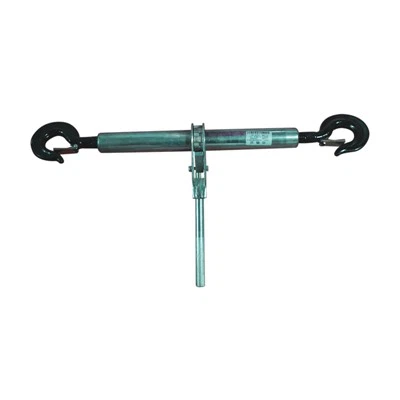
China is the world's largest producer and exporter of power line yoke plates. As a core component of high-voltage fittings, yoke plates have made significant contributions to ultra-high-voltage (UHV) power transmission, renewable energy grid integration, smart grids, and cross-border power transmission channels globally. UHV lines place extremely high demands on the mechanical strength, hole precision, and fatigue resistance of fittings. Traditional stamped yoke plates are gradually being replaced by CNC-machined, forged, and multi-split yoke plates (4/6/8 split). High-end yoke plates are 30%-100% more expensive than ordinary yoke plates, becoming a core driver of market growth.
To increase transmission capacity and reduce corona losses, 500kV and above lines commonly use 4-split, 6-split, and 8-split conductors, requiring dedicated multi-split yoke plates. In 2025, the domestic power line yoke plate market size was approximately 1.5 billion yuan, accounting for 35% of the total yoke plate market. It is projected that this proportion will increase to 50% by 2030, exceeding 4 billion yuan.
The development of new energy sources has led to a surge in demand for customized Power Line Yoke Plates. The high salt spray and humidity environments at sea require hot-dip galvanizing and passivation treatment for the plates, ensuring a corrosion resistance life of ≥30 years. The rapid popularization of distributed photovoltaic power stations, energy storage power stations, and virtual power plants is driving the upgrade of low-voltage/medium-voltage distribution networks, resulting in a continuous increase in demand for lightweight plates suitable for small capacity and various scenarios. In the world's existing transmission lines, over 30% have been in operation for more than 20 years, with prominent issues of aging and corrosion of fittings. The upgrading of old high-voltage lines is being carried out simultaneously in the United States, Europe, and India, leading to stable growth in demand for replacement plates, accounting for over 40% of total plate demand.
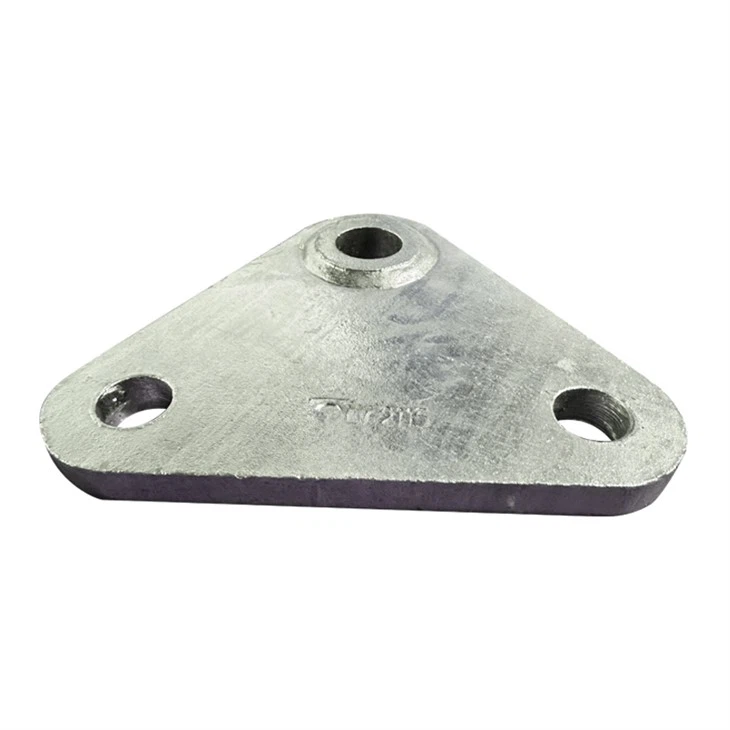
To increase the export volume of power line yoke plates, our company continuously upgrades its production processes, adhering to high-end, intelligent, and customized standards. Traditional yoke plates mainly include triangular and square yoke plates, manufactured using steel plate stamping and hot-dip galvanizing processes, used in 110kV-220kV lines.
The emergence of high-end yoke plates has captured a larger market share. Multi-split yoke plates utilize CNC cutting, CNC drilling, and overall alignment processes, achieving a hole position accuracy of ±0.05mm, used in 500kV and above lines; double-connected plates employ double-plate assembly, welding, and stress relief processes, achieving a load-bearing capacity of 100-500kN, used in ultra-high voltage tension strings; forged connecting plates utilize forging, heat treatment, and machining processes, achieving 30%+ higher strength than stamped parts and excellent fatigue resistance, used in ultra-high voltage, long-span, and critical lines.
During production, the Power Line Yoke Plate has undergone material upgrades, using high-strength steel instead of Q355, resulting in a 15% weight reduction and a 30% increase in strength. CNC machining replaces traditional stamping, significantly improving hole accuracy and parallelism. Overall heat treatment eliminates internal stress, improving fatigue resistance by over 50%. Hot-dip galvanizing followed by closed passivation achieves a corrosion resistance rating of ASTM A153 and a salt spray test of ≥1000 hours. Customized connector design, processing, and installation services are provided for different voltage levels, conductor split numbers, and terrain environments to meet individual customer needs and enhance customer loyalty.
As a critical load-bearing component of transmission lines, quality issues with the Power Line Yoke Plate can lead to major safety accidents such as line tripping, tower collapse, and large-scale power outages. The international market has stringent requirements for mechanical strength, fatigue performance, and corrosion resistance. Substandard product quality will result in returns, claims, and brand damage. Our response strategy includes: strict quality control, 100% non-destructive testing, third-party certification, and comprehensive after-sales service.