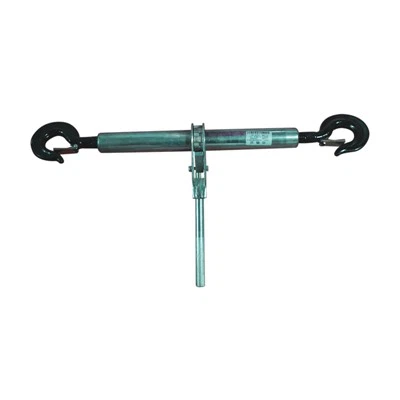
The quality of power fitting yoke plates directly impacts the mechanical strength, operational stability, and long-term service life of power lines. Especially in export applications, strict adherence to international standards such as IEC, ANSI, and GB is crucial. A unified, rigorous, and traceable quality control system is implemented throughout the entire process, from raw material intake, cutting and forming, drilling, hot-dip galvanizing, finished product inspection to packaging and shipment.
Power fitting yoke plates are primarily used in AC and DC overhead transmission lines, distribution lines, substations, and tower projects. They are manufactured using carbon steel and low-alloy steel, and product lines include L-shaped triangular yoke plates, LF-shaped rectangular yoke plates, LV-shaped double-suspension yoke plates, and PT-shaped adjustable yoke plates. As critical load-bearing metal structural components, raw materials are the first line of quality control; the use of substandard, unregistered, or substandard steel is strictly prohibited.
Power fitting yoke plates are typically made of Q235B or Q355B carbon structural steel or low-alloy high-strength steel. For special high-load circuits, 16Mn or Q355D low-alloy high-strength steel plates are used. All raw materials are hot-rolled steel plates from reputable steel mills; the use of scrap steel, recycled steel, and spliced plates is prohibited. We have very strict requirements for the performance of raw materials, such as yield strength ReL ≥ 235 MPa, tensile strength Rm 370~500 MPa, elongation after fracture A ≥ 25%, and a good 180° bending test result with no cracks or delamination. Performance requirements vary depending on the material and must be determined based on the specific circumstances.
Each batch of steel must be accompanied by a steel mill material certificate, which includes the furnace number, batch number, chemical composition, and mechanical properties. Upon arrival at the factory, raw materials must undergo an appearance inspection to ensure they are free of rust, scale, cracks, delamination, scratches, and deformation. Thickness must be measured at multiple points using a micrometer, with a tolerance within ±0.5mm. Surface flatness must be ≤1mm/m. Any unqualified raw materials are strictly prohibited from being stored or used in production; they must be isolated, marked, and returned to the supplier.

The forming precision of the Power Fitting Yoke Plate directly affects subsequent assembly, stress uniformity, and circuit safety. For cutting processes, we prioritize laser cutting, plasma cutting, and CNC precision cutting. For the cut surface, we require it to be flat, vertical, free of gaps, severe slag, burn-in, cracks, and hard spots. For dimensional control, the external dimensional tolerance is ±1.0 mm, diagonal deviation ≤1.0 mm, and flatness ≤1.0 mm/m. All cut edges must be deburred and chamfered, with sharp edges chamfered to C0.5~C1.5 to avoid sharp corners and burrs. The surface must be free of sharp protrusions to prevent scratches, stress concentration, and damage to the galvanized layer. If deformation occurs after cutting, pressure correction must be performed. After correction, the product must be free of twisting, bending, and warping, and the finished product flatness must be ≤1.0 mm/m. Products that cannot be corrected are scrapped.
When exporting power-fitting yoke plates, many users inquire about hole accuracy. We strictly adhere to a bolt hole diameter tolerance of ±0.3 mm, ensuring smooth, burr-free, step-free, and deformation-free inner walls. Enlarging, patching, or secondary modification of hole diameters is strictly prohibited. The center distance between two holes is ±0.5 mm. For multi-hole plates, relative position, angle, and symmetry must be guaranteed, with a hole group position error ≤0.8 mm and a hole centerline perpendicularity deviation ≤1° from the plate surface. Angled holes, elliptical holes, and stepped holes are not permitted. All dimensions undergo 100% inspection, and dimensional inspection records are kept for each batch. Defective products are strictly prohibited from proceeding to the next process.
As a load-bearing component, the mechanical strength of the power fitting yoke plate is a core safety indicator. Typically, the rated breaking load is 70 kN, 100 kN, 120 kN, 160 kN, or 210 kN. Our company requires that the measured breaking load be ≥ 100% of the rated breaking load. During loading, there should be no sudden brittle fracture, cracks, significant plastic deformation, or hole tearing. After the test, there should be no permanent deformation affecting its use.
Although the power fitting yoke platehas a simple structure, as a critical load-bearing component of transmission lines, its quality directly determines the safety of the line. This standard establishes a complete, rigorous, and implementable export-grade quality control system, from raw materials, processing, galvanizing, inspection to packaging, meeting the requirements of mainstream international standards. Users can purchase with confidence.