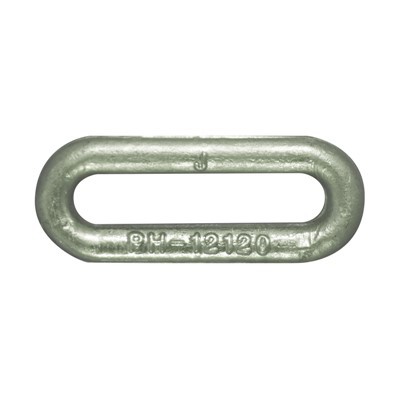

As a supplier of DT Adjusting Clevis Rings, I often encounter questions from customers regarding the shock resistance of these crucial components. In this blog post, I will delve into the concept of shock resistance in DT Adjusting Clevis Rings, exploring the factors that influence it, how it is measured, and its significance in various applications.
Understanding DT Adjusting Clevis Rings
Before we discuss shock resistance, let's briefly understand what a DT Adjusting Clevis Ring is. A DT Adjusting Clevis Ring is a type of hardware used in mechanical and industrial applications. It is designed to provide a flexible connection between two components, allowing for angular movement and adjustment. These rings are commonly used in lifting, towing, and other applications where a secure and adjustable connection is required.
What is Shock Resistance?
Shock resistance refers to the ability of a material or component to withstand sudden and intense forces without suffering permanent damage or failure. In the context of DT Adjusting Clevis Rings, shock resistance is crucial because these rings are often subjected to sudden impacts and loads during operation. For example, in a lifting application, a clevis ring may experience a sudden shock when a heavy load is dropped or when there is a sudden change in the direction of the load.
Factors Affecting Shock Resistance
Several factors influence the shock resistance of a DT Adjusting Clevis Ring. These include:
Material Selection
The material used to manufacture the clevis ring plays a significant role in its shock resistance. High-strength materials such as alloy steels are commonly used because they have excellent mechanical properties, including high tensile strength and toughness. These materials can absorb and distribute the energy from a shock load, reducing the risk of failure.
Heat Treatment
Heat treatment is a process used to modify the properties of a material. By subjecting the clevis ring to specific heat treatment processes, such as quenching and tempering, the material's hardness, strength, and toughness can be optimized. Proper heat treatment can significantly improve the shock resistance of the clevis ring.
Design and Geometry
The design and geometry of the clevis ring also affect its shock resistance. A well-designed clevis ring will have a shape that distributes the load evenly across its surface, reducing stress concentrations. Additionally, features such as rounded edges and smooth surfaces can help to prevent crack initiation and propagation, further enhancing the ring's shock resistance.
Manufacturing Process
The manufacturing process used to produce the clevis ring can also impact its shock resistance. Precision manufacturing techniques, such as forging and machining, can ensure that the ring has consistent dimensions and a high-quality surface finish. This can improve the ring's overall strength and durability, making it more resistant to shock loads.
Measuring Shock Resistance
Measuring the shock resistance of a DT Adjusting Clevis Ring is a complex process that typically involves laboratory testing. One common method is the Charpy impact test, which measures the energy absorbed by a material when it is subjected to a sudden impact. In this test, a notched specimen of the clevis ring material is struck by a pendulum, and the energy absorbed by the specimen is measured. The higher the energy absorbed, the better the shock resistance of the material.
Another method is the drop weight test, which involves dropping a weight onto the clevis ring from a specific height. The impact energy is calculated based on the weight and the height of the drop. This test can provide a more realistic simulation of the shock loads that the clevis ring may encounter in actual use.
Significance of Shock Resistance in Applications
The shock resistance of a DT Adjusting Clevis Ring is of utmost importance in various applications. In lifting and towing applications, for example, a clevis ring that can withstand sudden shocks and impacts is essential for ensuring the safety of the load and the operators. A failure of the clevis ring due to a shock load could result in a serious accident, causing damage to property and potentially injuring people.
In the automotive and aerospace industries, DT Adjusting Clevis Rings are used in critical components such as suspension systems and landing gear. In these applications, the shock resistance of the clevis ring is crucial for maintaining the performance and reliability of the system. A failure of the clevis ring could lead to a loss of control or a catastrophic failure of the vehicle or aircraft.
Ensuring High Shock Resistance in DT Adjusting Clevis Rings
As a supplier of DT Adjusting Clevis Rings, we take several steps to ensure that our products have high shock resistance. These include:
Quality Material Sourcing
We source high-quality materials from reputable suppliers. Our materials are carefully selected based on their mechanical properties and suitability for the intended application.
Advanced Manufacturing Processes
We use advanced manufacturing processes, such as precision forging and machining, to produce our clevis rings. These processes ensure that the rings have consistent dimensions and a high-quality surface finish, which improves their overall strength and durability.
Rigorous Testing
We subject our clevis rings to rigorous testing to ensure that they meet or exceed industry standards for shock resistance. Our testing procedures include both laboratory tests and real-world simulations to ensure that the rings can withstand the shock loads they are likely to encounter in actual use.
Conclusion
In conclusion, the shock resistance of a DT Adjusting Clevis Ring is a critical factor that determines its performance and reliability in various applications. By understanding the factors that influence shock resistance, measuring it accurately, and taking steps to ensure high shock resistance in our products, we can provide our customers with clevis rings that meet their needs and exceed their expectations.


If you are in the market for high-quality DT Adjusting Clevis Rings with excellent shock resistance, we invite you to contact us for a detailed discussion. Our team of experts is ready to assist you in selecting the right product for your application and to provide you with all the information you need to make an informed decision. Let's work together to find the best solution for your needs.
References
- Metals Handbook: Properties and Selection: Irons, Steels, and High-Performance Alloys, ASM International
- Mechanical Engineering Design, Joseph E. Shigley, Charles R. Mischke, Richard G. Budynas
- ASTM Standards for Metallic Materials Testing, ASTM International