


As a supplier of Dual-purpose Nylon Pulleys, I've witnessed firsthand the growing demand for these versatile components in various industries. One of the most frequently asked questions about our Dual-purpose Nylon Pulleys is regarding their impact resistance. In this blog post, I'll delve into the topic, exploring what impact resistance means for these pulleys, the factors that influence it, and its significance in real-world applications.
Understanding Impact Resistance
Impact resistance refers to a material's ability to withstand sudden forces or shocks without breaking, cracking, or deforming significantly. In the context of a Dual-purpose Nylon Pulley, this property is crucial as it determines the pulley's durability and reliability in demanding environments. When a pulley is subjected to an impact, such as a sudden load or a collision, its impact resistance dictates whether it can continue to function effectively or if it will fail catastrophically.
Factors Affecting the Impact Resistance of Dual-purpose Nylon Pulleys
Several factors contribute to the impact resistance of Dual-purpose Nylon Pulleys. Understanding these factors can help users make informed decisions when selecting the right pulley for their specific applications.
Material Composition
The type of nylon used in the pulley's construction plays a significant role in its impact resistance. Nylon is a synthetic polymer known for its high strength, toughness, and abrasion resistance. However, different grades of nylon have varying properties, and some are specifically formulated to enhance impact resistance. For example, nylon 6/6 is a common choice for pulley manufacturing due to its excellent balance of strength, stiffness, and impact resistance. Additionally, additives such as glass fibers or rubber can be incorporated into the nylon matrix to further improve its impact performance.
Design and Geometry
The design and geometry of the pulley also influence its impact resistance. A well-designed pulley will distribute the impact forces evenly across its structure, reducing the stress concentration at any single point. Features such as ribbing, thickened walls, and rounded edges can enhance the pulley's ability to absorb and dissipate energy during an impact. Moreover, the pulley's size and shape can affect its impact resistance, with larger and more robust pulleys generally being more resistant to impacts than smaller ones.
Manufacturing Process
The manufacturing process used to produce the Dual-purpose Nylon Pulley can have a significant impact on its final properties, including impact resistance. Injection molding is a common method for manufacturing nylon pulleys, as it allows for precise control over the part's dimensions and properties. However, the quality of the injection molding process, including factors such as temperature, pressure, and cooling rate, can affect the pulley's internal structure and, consequently, its impact resistance. Properly controlled manufacturing processes ensure that the nylon is uniformly distributed throughout the pulley, minimizing the presence of voids or weak spots that could compromise its impact performance.
Significance of Impact Resistance in Real-world Applications
The impact resistance of Dual-purpose Nylon Pulleys is of utmost importance in a wide range of applications, particularly those involving heavy loads, high speeds, or harsh operating conditions. Here are some examples of industries and applications where impact resistance is critical:
Power Construction
In the power construction industry, Dual-purpose Nylon Pulleys are used for various tasks, such as stringing cables and conductors. These pulleys are often subjected to sudden impacts during installation and maintenance operations, as cables may be pulled or dropped with significant force. A pulley with high impact resistance can withstand these impacts without damage, ensuring the smooth and efficient operation of the power transmission system. For instance, our Dual-purpose Nylon Pulley is designed to handle the rigors of power construction applications, providing reliable performance even in the most challenging environments.
Mining
Mining operations involve the handling of heavy equipment and materials, which can subject pulleys to severe impacts. Nylon pulleys with high impact resistance are ideal for mining applications, as they can withstand the rough handling and abrasive conditions commonly encountered in mines. They are used in conveyor systems, hoists, and other equipment to facilitate the movement of ore, coal, and other materials. Our Dual-purpose Nylon Pulleys have been proven to perform well in mining environments, offering long service life and reduced maintenance costs.
Agriculture
In the agricultural sector, pulleys are used in a variety of machinery, including tractors, combines, and irrigation systems. These pulleys may be exposed to impacts from rocks, debris, or other objects during operation. A pulley with good impact resistance can prevent damage and ensure the proper functioning of the agricultural equipment. Our Dual-purpose Nylon Pulleys are suitable for agricultural applications, providing reliable performance and durability in the field.
Testing and Evaluation of Impact Resistance
To ensure the quality and performance of our Dual-purpose Nylon Pulleys, we conduct rigorous testing and evaluation procedures. One common method for testing impact resistance is the Charpy impact test, which measures the energy absorbed by a material when it is struck by a pendulum. The test specimen is notched to create a stress concentration point, and the impact energy is measured as the difference between the initial and final heights of the pendulum. A higher impact energy indicates better impact resistance.
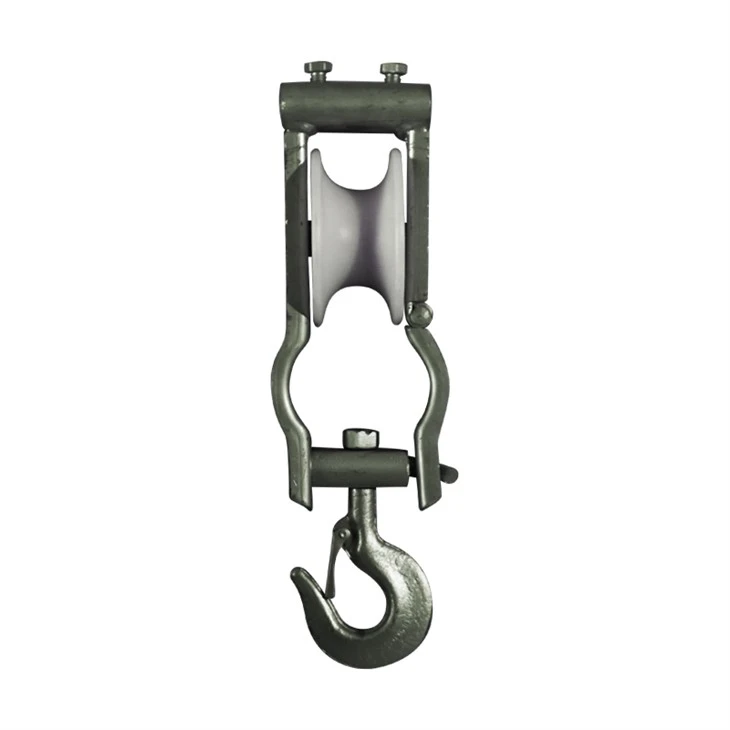

In addition to the Charpy impact test, we also perform real-world simulations and field testing to evaluate the performance of our pulleys under actual operating conditions. This allows us to identify any potential issues and make necessary improvements to our products. By continuously monitoring and improving the impact resistance of our Dual-purpose Nylon Pulleys, we can provide our customers with high-quality products that meet their specific requirements.
Conclusion
The impact resistance of Dual-purpose Nylon Pulleys is a critical property that determines their durability and reliability in various applications. By understanding the factors that influence impact resistance, such as material composition, design, and manufacturing process, we can produce pulleys that offer excellent performance and long service life. Our Dual-purpose Nylon Pulleys are designed to meet the demanding requirements of industries such as power construction, mining, and agriculture, providing reliable solutions for a wide range of applications.
If you're in the market for high-quality Dual-purpose Nylon Pulleys or other power construction tools, such as the Double Hook Wire Tightener or the FRYJ-2/G Vibration Damper, we'd love to hear from you. Contact us today to discuss your specific needs and explore how our products can benefit your operations. We look forward to partnering with you to provide the best solutions for your business.
References
- ASTM D6110 - Standard Test Method for Determining the Charpy Impact Resistance of Notched Specimens of Plastics.
- "Engineering Plastics: Properties and Applications" by Donald V. Rosato, Dominick V. Rosato, and Michael G. Rosato.
- "Polymer Science and Technology" by Charles E. Carraher Jr.


