
Hey there! As a clevis supplier, I've been getting a lot of questions lately about how these nifty little components connect two other parts. So, I thought I'd take a few minutes to break it down for you.
First off, what exactly is a clevis? Well, it's a U - shaped piece of metal with holes at the end of the "U" arms. These holes are used to connect the clevis to other components, usually with a pin. Clevises come in all sorts of shapes and sizes, and they're used in a wide range of industries, from automotive to aerospace.
Let's start with the basic process of how a clevis connects two components. The first step is to choose the right clevis for the job. You need to consider factors like the size of the components you're connecting, the amount of force the connection will need to withstand, and the environment in which it will be used. For example, if you're working in a high - stress environment, you'll want a heavy - duty clevis.
We offer a great selection of clevises, like the UB - 10 Clevis. This one is known for its durability and versatility. It can handle a fair amount of stress and is suitable for many different applications.
Once you've got the right clevis, you'll need to prepare the components that you're going to connect. This usually involves making sure that the holes in the components align with the holes in the clevis. You might need to drill new holes or ream existing ones to get a proper fit.
Now, here comes the connection part. You insert a pin through the holes in the clevis and the components. The pin is what holds everything together. It's important to choose the right pin for the job, too. The pin should be strong enough to handle the load, and it should fit snugly in the holes.
There are different types of pins you can use. One common type is the cotter pin. A cotter pin is a split pin that you insert through the hole in the pin and then bend the ends to prevent the pin from coming out. Another option is a retaining ring. A retaining ring fits into a groove on the pin to keep it in place.
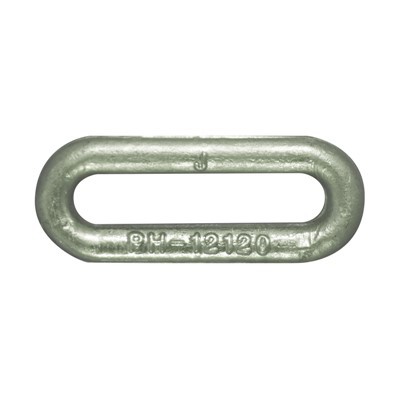
Let's talk about another type of clevis we offer, the PD - 12100 Clevis. This clevis is designed for more precise applications. It has a very accurate hole alignment, which makes it easier to connect components precisely. This is especially important in industries where precision is key, like in the manufacturing of medical devices.
In some cases, you might need to use a washer between the clevis and the components. Washers help distribute the load evenly and prevent damage to the surfaces of the components. They can also reduce friction, which is important if the components will be moving relative to each other.
Now, let's get into a bit more detail about the forces involved in a clevis connection. When you connect two components with a clevis, there are different types of forces that the connection needs to withstand. Tensile force is one of them. This is the force that tries to pull the components apart. A well - designed clevis and pin combination can handle a significant amount of tensile force.
Shear force is another important factor. Shear force is the force that tries to cut through the pin. The strength of the pin and the clevis is crucial in resisting shear force. That's why we make sure that our clevises, like the Z Clevis, are made from high - quality materials that can handle both tensile and shear forces.


The Z Clevis is unique in its shape. Its design allows for a different kind of connection, which can be useful in some specialized applications. For example, it might be used in a system where there's a need for a bit of flexibility in the connection.
In addition to the mechanical connection, you also need to think about the environment. If the connection is going to be exposed to moisture, chemicals, or high temperatures, you'll need to take extra precautions. You might need to use a clevis that's made from a corrosion - resistant material, like stainless steel. You could also apply a protective coating to the clevis and the pin to prevent rust and other forms of damage.
When it comes to installation, it's always a good idea to follow the manufacturer's instructions. We provide detailed instructions with all of our clevises to make sure that you get the best results. And if you have any questions during the installation process, our customer support team is always here to help.
Now, let's talk about some real - world examples of how clevises are used. In the automotive industry, clevises are used to connect parts like the steering linkage. The steering linkage needs to be able to move smoothly and precisely, and a clevis connection can provide that.
In the construction industry, clevises are used to connect scaffolding components. They need to be strong and reliable to ensure the safety of workers.
If you're involved in any project where you need to connect two components, a clevis could be the perfect solution. And as a clevis supplier, we're here to help you find the right one for your needs.
Whether you're a DIY enthusiast working on a home project or a professional in a large - scale industry, we've got the clevises you need. Our products are of the highest quality, and we offer competitive prices.
If you're interested in learning more about our clevises or have any questions about how they can be used in your project, don't hesitate to reach out. We're happy to have a chat with you and help you make the right choice. You can start exploring our product range and see which clevis is the best fit for you. And who knows, maybe we'll be working together on your next project soon!
References
- Engineering Handbook of Fastening Technology, various authors
- Industrial Component Design Manual, industry experts