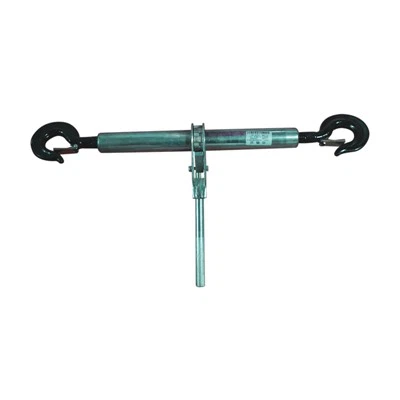
Galvanized ball head hanging rings are mainly sold to regions with high demand for power construction, such as Southeast Asia, the Middle East, and Africa, for use in local medium- and low-voltage distribution lines and high-voltage transmission projects. They are also exported to some European and American countries for substation renovation and upgrading of aging lines.
So, what kind of galvanized ball joint rings can be sold overseas? What issues should we pay attention to during the production process?
To ensure the successful export of galvanized ball head hanging rings, the core requirements are meeting three key conditions: compliance standards of the target market, customer quality requirements, and compatibility with trade processes. The production process must be strictly controlled across four dimensions: standard alignment, quality control, compliance with environmental regulations, and trade compatibility. Different countries have different requirements for hanging rings:
European Market: Must comply with IEC 61466 and EN 50168; hot-dip galvanized layer must meet ISO 1461; zinc layer thickness ≥85μm for outdoor use.
US Market: Follows ANSI C119.1 and ASTM A153; load-bearing capacity must be certified by UL or RUS.
Southeast Asian/Middle Eastern/African Markets: Mostly accept IEC standards or Chinese GB standards, but note that some countries (such as Saudi Arabia and the UAE) require products to pass local SASO, ESMA, or other certifications.

Overseas customers have much higher requirements for the stability and durability of galvanized ball head hanging rings than domestic customers, requiring them to meet the following stringent quality standards:
Material: Standard models use Q355 carbon steel, high-load models use alloy steel (such as 40Cr), and a material spectral analysis report is required (proving no impurities and meeting strength standards).
Load Capacity: Tensile testing by a third-party laboratory (such as SGS, TÜV) is required, with a breaking load ≥ 1.2 times the nominal value (1.3 times in some markets), and no brittle fracture, excessive deformation, or other issues.
Structural Integrity: Forged parts must be free of porosity, looseness, and cracks (must pass UT ultrasonic testing); stamped parts must be free of folded edges and burrs (edge chamfers ≥ 2mm to prevent scratches to workers or related components during installation). Hot-dip galvanizing process: Zinc layer thickness 85-120μm (≥100μm required for seaside salt spray scenarios), adhesion meets standards (no zinc layer peeling after cross-cut test, conforming to ISO 2409), salt spray test (neutral salt spray for 48 hours) shows no rust or red rust.
Key dimensions (ball head diameter, hanging ring hole diameter, thread specification, fork opening) tolerances are controlled within ±0.02mm, measured using a coordinate measuring machine, and a dimensional inspection report is provided.
Thread processing uses thread rolling (not turning) to improve wear resistance and prevent stripping during lifting. Thread accuracy conforms to ISO 965-1 (standard thread tolerances).
Overseas customers primarily purchase in bulk, so galvanized ball head hanging rings need to be compatible with foreign trade logistics and purchasing habits:
Minimum Order Quantity (MOQ): Supports minimum order quantity (MOQ) of 50-100 pieces (for small customers' trial orders). Bulk orders (1000 pieces or more) are negotiable. Monthly production capacity ≥ 500 tons (to meet the long-term supply needs of large customers).
Packaging: Export standard packaging (moisture-proof paper bags + corrugated cardboard boxes + pallets), with internal foam or pearl cotton separation to prevent zinc layer abrasion during transportation; outer boxes are printed with bilingual (Chinese and English) labels (product name, model, quantity, gross weight, and warning "Moisture-proof, Handle with care"). Logos or barcodes can be printed upon customer request.
Delivery Time: Delivery time for standard models ≤ 7 days; delivery time for customized models (adjusted dimensions, thickened zinc layer) ≤ 15 days. This must be clearly stated in the contract to avoid delays in customer project schedules.