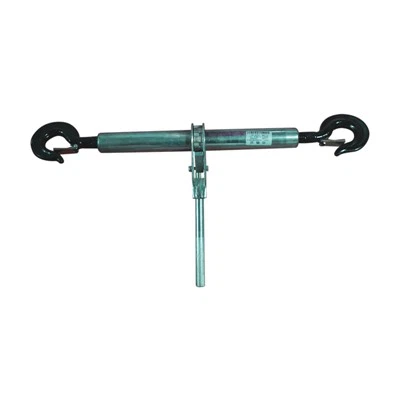
First of all, rated failure load cannot be equated to safe working load. All P‑series models from P‑0770 to P‑32120 mark nominal breaking load, ranging from 70 kN to 320 kN. Nominal failure load is the minimum destructive test value under laboratory static tension condition. According to global overhead power fitting common specification, engineering safe working load should adopt 1/3 of nominal breaking load. Some overseas purchasers directly take labeled breaking load as allowable operating load, this wrong calculation will leave serious safety hazard, especially for wind‑prone mountainous zones and coastal overhead circuits suffering frequent wind vibration. Dynamic alternating tension generated by wind will accelerate metal fatigue. Even if components do not break instantly, invisible internal damage will accumulate year by year.
Secondly, dimensional parameters shall not be overlooked. Three core dimensions C, M, H determine whether P‑type hanging plate can assemble smoothly with matched hardware. C stands for inner plate gap; M means matched bolt diameter; H is center‑to‑center distance of two mounting holes. For instance, P‑21100 has C=24 mm, M=24 mm, H=100 mm. If buyers only order according to load value without checking dimension data, even though breaking‑load meets requirement, plate gap may be too narrow or too wide to clamp the ear plate of tri‑joint plate or adjusting link. Under cross‑border procurement scenario, returning goods due to dimension mismatch will generate extremely high ocean‑freight and time cost. It is worthy to note that P‑Type hanging plate is fixed‑distance connection component without adjustment holes. It can never replace DB‑type adjuster plates which own multi‑holes for length adjustment. Quite a few overseas inquiries mixed up these two categories and caused order error.
Third point, anti‑corrosion requirement for different geographic areas needs differentiated attention. All factory standard P‑type hanging plates adopt hot‑dip galvanizing anti‑corrosion craft. But standard zinc coating thickness fits ordinary inland atmospheric environment. When projects locate in coastal salt‑spray zone, island power‑supply network or chemical‑industrial surrounding area, ordinary galvanizing may fail to reach expected service life. Buyers should clearly put forward higher zinc‑coating thickness requirement at inquiry stage. Meanwhile threaded parts shall be protected during galvanizing process. Poor thread protection will cause zinc accumulation on thread, making bolts unable to screw‑in at construction site. This defect often cannot be found from product pictures before shipment.
In international trade, complete supporting documents are equally important as product quality. Except commercial invoice and packing list, overseas projects usually require Material Test Certificate(MTC), factory inspection report. Some tender projects demand third‑party witness test record. Experienced suppliers will actively provide English datasheet and 2‑D drawing, helping purchasers do technical review. Buyers are suggested to confirm drawing, key dimension, load requirement, anti‑corrosion standard and document list before formal order placement.
To sum up, purchasing P‑Type hanging plate is not only a simple order‑placing according to load grade. Load conversion calculation, dimension matching, regional anti‑corrosion demand and supporting document preparation all need comprehensive evaluation. Avoiding these frequent pitfalls will help overseas power‑project clients reduce rework risk, cut after‑sales cost and guarantee long‑term stable operation of overhead power network