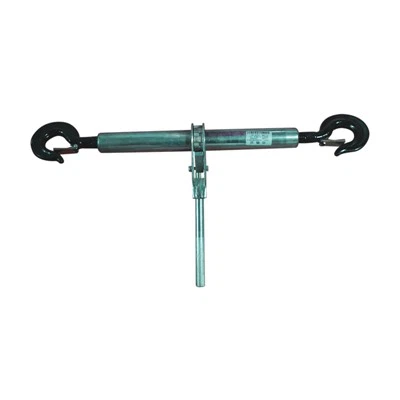
For hot dip galvanized yoke plates used in power transmission lines, the standardized implementation of the hot-dip galvanizing process directly determines the product's service life and safety performance. This article will provide a detailed introduction from the aspects of process principles, core procedures, key quality control points, process advantages, and foreign trade compliance standards.
Hot-dip galvanizing is essentially a metallurgical bonding reaction. When a surface-cleaned steel yoke is immersed in molten zinc at approximately 450°C, the iron (Fe) in the steel substrate and the zinc (Zn) in the molten zinc undergo a continuous diffusion and alloying reaction, forming a three-layer galvanized layer. From the inside out, these layers are:
Iron-Zinc Alloy Layer (Inner Layer): Directly bonded to the steel substrate, mainly composed of Fe3Zn10 and FeZn7, it is dense and has extremely strong adhesion, providing the core guarantee for the corrosion resistance and anti-peeling properties of the galvanized layer.
Zinc-Iron Alloy Layer (Middle Layer): Composed of FeZn13, it has a moderate thickness and combines hardness and toughness.
Pure Zinc Layer (Outer Layer): Covering the outermost layer, it is soft and ductile, forming a dense zinc oxide protective film on the surface. Furthermore, in the event of localized scratches, it provides continuous protection to the scratched area through the sacrificial anodic protection effect.
For Hot Dip Galvanized Yoke Plates, the total thickness of the three-layer structure must be strictly controlled to be above 65μm. For high-requirement applications, the thickness can be increased to 85μm to meet the needs of high salt spray and highly corrosive environments.

The production process of Hot Dip Galvanized Yoke Plates must follow a standardized process of pretreatment - hot-dip galvanizing - posttreatment - inspection. Among them, pretreatment is the key step that determines the quality of galvanizing and directly affects the adhesion and uniformity of the coating.
Degreasing treatment: Use an alkaline degreasing agent to soak at 60-80℃ for 5-10 minutes, or use high-pressure spray cleaning to remove stamping oil, rust-preventive oil, dust and oil stains from the surface of the connecting plate. The stamped edges of the yoke plate and the inner walls of the bolt holes are areas prone to oil residue, requiring extended spraying time or ultrasonic-assisted cleaning.
Water washing and purification: Rinse through a primary and secondary water washing tank to remove residual degreasing agent. This process must ensure no water accumulation or residual agent in the bolt holes.
Acid pickling and rust removal: Use hydrochloric acid for pickling, immersing at room temperature for 10-15 minutes to remove oxide scale, rust, and rolling oxide layer from the yoke plate surface. For thicker oxide scale, the pickling time can be appropriately extended, but strict control is required to avoid over-pickling, which can lead to surface roughness and reduced coating adhesion.
Water washing and neutralization: Immerse in an alkaline neutralization tank to neutralize residual acidic substances, ensuring a neutral surface. The inner walls of the bolt holes must be thoroughly rinsed to prevent acid residue from causing blistering in the galvanized layer.
Drying and preheating: Dry at 120-150℃ for 10-15 minutes to completely remove surface moisture. The surface must be free of water stains and oxidation; otherwise, the galvanized layer may show signs of blistering or exposure to oxidized material. Defects such as those mentioned above; Zinc immersion: The zinc immersion temperature is strictly controlled at 445-460℃. The immersion time is adjusted according to the thickness of the plate. When the thickness is ≤6mm, the immersion time is 1-2 minutes. When the thickness is >6mm, the immersion time is 2-3 minutes. Cooling treatment: Use air cooling or water mist cooling to cool to room temperature. During the cooling process, avoid collisions between Hot Dip Galvanized Yoke Plates to prevent scratches on the coating.
For exported Hot Dip Galvanized Yoke Plates, the manufacturing process must meet the relevant standards and certification requirements of the target market; otherwise, they will not be able to enter the market. As a professional manufacturer, our company prioritizes product quality; please feel free to purchase.