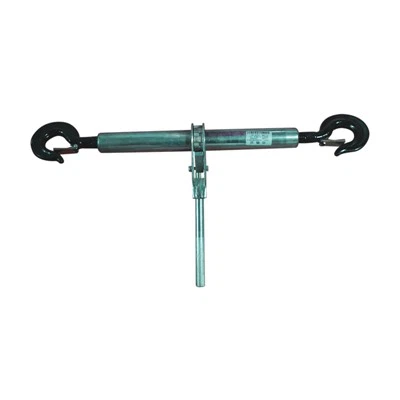
Galvanized steel yoke plates are critical load-bearing connection fittings in overhead transmission lines and substation structures. They primarily bear core functions such as load transfer, insulator string suspension, and conductor fixation. Their mechanical properties, dimensional accuracy, corrosion resistance, and structural stability directly determine the safety of line operation. Hot-dip galvanizing not only provides the workpiece with dual corrosion protection-physical shielding and cathodic protection-but also significantly impacts the steel substrate, dimensional accuracy, surface condition, and mechanical properties during the high-temperature immersion, chemical reaction, and rapid cooling processes. These effects primarily enhance the positive functions of the galvanized steel yoke plate.
As a load-bearing fitting, the core mechanical properties of galvanized steel yoke plates are tensile strength, yield strength, elongation, impact toughness, and hardness. Common materials include Q235B, Q355B, ASTM A36, and A572 Gr50, all of which are low-carbon structural steels. Hot-dip galvanizing temperatures are 440–460℃, below the recrystallization temperature of the steel, thus not causing a significant decrease in the base material strength. Tensile strength variation is typically <5%, generally maintaining factory-set levels. Yield strength fluctuates slightly but remains generally stable. Due to the high-temperature tempering effect, internal stress is slightly released, and plasticity is slightly improved. Short-term high-temperature holding causes a slight decrease in surface hardness, which does not affect the overall load-bearing capacity.
Galvanized steel yoke plates have extremely high requirements for hole diameter, hole spacing, flatness, perpendicularity, and overall dimensions. Hot-dip galvanizing is the main process causing dimensional deviations, with factors including zinc layer thickness, thermal stress deformation, and cooling shrinkage. During production, our standard requirement for plate thickness is an average zinc layer thickness of ≥86μm for plates ≥6mm, with local thicknesses reaching 100–120μm. The dimensional increase is approximately 0.08–0.12mm on each side, with an overall dimensional increase ≤0.24mm. Within the allowable tolerances, the hole diameter decreases by 0.16–0.24mm, having minimal impact on standard bolt assembly. Due to the uniform zinc layer adhesion, the hole spacing center position remains essentially unchanged, with a deviation ≤0.1mm.

Hot-dip galvanizing directly determines the surface condition of galvanized steel yoke plates, affecting appearance, smoothness, zinc nodules, and burrs. It forms a uniform silver-gray zinc layer, resulting in good appearance consistency, covering machining marks, minor scratches, and oxidation, meeting export product appearance standards, reducing white rust, and creating a cleaner surface.
Galvanized steel yoke plates are typically designed for a lifespan of 20–30 years. Corrosion resistance is a core indicator, and hot-dip galvanizing is the decisive process for improving corrosion resistance; there is no alternative. The dual corrosion protection mechanism, with a dense zinc layer, isolates corrosive media such as H₂O, O₂, Cl⁻, and SO₂, with zinc preferentially corroding, protecting the steel substrate from rust. After hot-dip galvanizing, the yoke plate can withstand ordinary atmospheric environments, coastal salt spray environments, industrial acid rain environments, and high humidity and high UV outdoor environments.
Transmission lines are subjected to wind vibration, icing loads, temperature stress, and conductor vibration over long periods. The connecting plates need excellent fatigue resistance, and hot-dip galvanizing has a significant impact on this. Hot-dip galvanizing eliminates internal stress from processing, reduces the probability of fatigue crack initiation, inhibits surface pitting corrosion, prevents pitting-induced fatigue cracking, stabilizes the microstructure, and ensures no dimensional change during long-term service.
Hot-dip galvanizing does not impair the structural load-bearing performance of galvanized steel yoke plates; on the contrary, it significantly improves corrosion resistance and operational reliability, making it an essential process for ensuring product value.