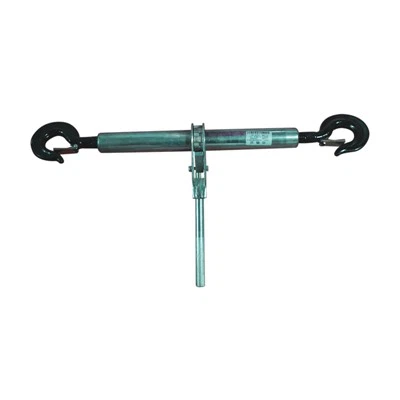
As an indispensable core connecting hardware in power transmission and transformation line engineering, Strain Yoke Plates are a "key hub" ensuring the safe and stable operation of high-voltage, ultra-high-voltage, and extra-high-voltage transmission lines worldwide. Specifically designed to withstand conductor tension loads, they are widely adaptable to harsh environments such as tension sections, angle towers, terminal towers, and wind farm collector lines. With their superior mechanical properties, all-scenario adaptability, and long-term durability, they have become a benchmark product in the foreign trade power fittings industry, and have been exported to more than 50 countries and regions in Southeast Asia, the Middle East, Africa, Europe, and South America.
Material selection is the foundation of Strain Yoke Plates' quality. We offer two high-specification material options to meet the different climate and load requirements of various markets:
Hot-dip galvanized low-carbon alloy steel: Q355/Q450 grade low-carbon alloy steel is selected, with tensile strength ≥450MPa and yield strength ≥355MPa. It can stably withstand the tension of 10-50 tons of conductors and fully meet the requirements of global mainstream standards such as IEC 61284, ANSI C119.4, and GB/T 2314-2008 for high-strength hardware. The surface is treated with hot-dip galvanization, and the zinc layer thickness is strictly controlled at ≥85μm. Some customized models for high-corrosion environments can reach more than 100μm.
High-strength aluminum alloy: Utilizing 6061-T6 or 7075-T6 high-strength aluminum alloy, with a tensile strength ≥310MPa and a density only 1/3 that of steel, the weight of a single connecting plate is reduced by more than 60% compared to steel products of the same specifications. This significantly reduces the load on the tower and transportation costs, while also reducing the labor intensity of high-altitude construction workers and improving installation efficiency. The aluminum alloy itself has excellent resistance to electrochemical corrosion, and the naturally formed oxide film on the surface can effectively isolate air and moisture, resisting general corrosive environments without additional galvanizing treatment. For special scenarios, an additional anodized coating can be applied to further enhance the corrosion resistance level.

The structural design of Strain Yoke Plates directly determines their stress stability and adaptability. Our products have undergone finite element analysis optimization, with every detail designed around "smooth force transmission, convenient and efficient installation, and comprehensive scenario coverage:
Hole Layout: Scientifically arranged to prevent stress concentration;
Number of Holes: Covering the full range of 2-8 hole specifications, meeting connection requirements from single-phase conductors to 6- and 8-split conductors. 2- and 3-hole specifications are suitable for single-phase conductor tension connections, with holes arranged in a straight line or isosceles triangle to ensure tension is transmitted linearly along the connecting plate axis, with bending moment loss ≤5%; 4- and 8-hole specifications feature a symmetrical multi-hole array design, allowing simultaneous connection of multiple insulator strings and tension clamps, achieving uniform stress distribution on multi-split conductors, with load distribution error ≤3%.
Precision Control: Hole diameter specifications cover M16, M20, M24, M27, and M30, with tolerances strictly adhering to the H9 standard (upper deviation +0.036mm, lower deviation 0), precisely matching global mainstream bolt specifications, with fit clearance controlled within 0.1-0.3mm, facilitating rapid high-altitude assembly and preventing wear caused by bolt wobble during long-term operation. Hole wall treatment: All holes are chamfered at 45° with a chamfer depth of 1-2mm. This effectively prevents sharp edges from cutting the gasket or damaging the bolt threads when tightening the bolts, while also eliminating stress concentration points at the hole opening and reducing the risk of fatigue cracks.
Strengthened Structure: Enhanced Deformation Resistance
Strengthening Rib Design: Integrated raised reinforcing ribs are added to the back of the yoke plate and in stress concentration areas. The height of the reinforcing ribs is 1.5-2 times the thickness of the base plate, and the width is consistent with the base plate. Through structural optimization, the bending strength of the connecting plate is increased by more than 40%, and the deformation resistance is increased by 50%. No plastic deformation occurs under long-term full-load operation, ensuring the stability of the line structure.
Main Body Shape: A rectangular or elliptical design with rounded corners is adopted. This reduces wind load resistance and avoids metal fatigue caused by airflow vortices generated by sharp edges in strong wind environments. It also facilitates seamless connection with standardized components such as crossarms and insulator fittings.
Strain Yoke Plates strictly adhere to mainstream global power fitting standards such as IEC, ANSI, GB, DIN, and BS. They can be directly used with insulator strings, tension clamps, and tower fittings from different countries without additional processing or modification, significantly reducing customers' engineering adaptation costs. Customization of non-standard specifications is supported according to customers' special needs, with flexible minimum order quantities to meet the needs of small-batch trial orders and large-volume purchases.
Superior materials and sophisticated anti-corrosion technology ensure a product lifespan of over 30 years, far exceeding the industry average. No additional anti-corrosion maintenance is required during this period, significantly reducing customers' line maintenance costs. Before leaving the factory, products undergo rigorous tensile testing, fatigue testing, corrosion testing, and dimensional accuracy inspection, achieving a 100% pass rate. This ensures long-term stable operation after installation, minimizing economic losses from fault repairs.
Whether in diverse geographical environments such as plains, mountains, coastlines, and deserts, or for different voltage levels of transmission lines (high voltage, ultra-high voltage, extra-high voltage, etc.), or for various application scenarios such as conventional lines, long-span projects, and wind farms, our Strain Yoke Plates can provide precisely tailored solutions. They have already been successfully applied to several key projects, including Southeast Asian transoceanic power transmission projects, ultra-high voltage lines in the Middle East deserts, African savanna power distribution projects, and European wind power collection lines, earning a strong reputation.