


The fatigue life of an adjusting clevis ring is a crucial factor that significantly impacts its performance and reliability in various applications. As a supplier of adjusting clevis rings, understanding and communicating this concept is essential for our customers to make informed decisions.
Understanding Fatigue in Adjusting Clevis Rings
Fatigue in mechanical components, including adjusting clevis rings, occurs when a material is subjected to repeated loading and unloading cycles. These cyclic loads can cause microscopic cracks to initiate and propagate within the material over time. Eventually, these cracks can grow to a critical size, leading to sudden and catastrophic failure of the component.
For adjusting clevis rings, the cyclic loads can come from a variety of sources. In many applications, they are used to connect different parts of a mechanical system, such as in suspension systems, steering linkages, or industrial machinery. The movement and vibrations within these systems result in repeated forces being applied to the clevis ring. For example, in an automotive suspension system, the clevis ring may experience cyclic loading due to the up - and - down motion of the wheels as the vehicle travels over uneven road surfaces.
Factors Affecting the Fatigue Life of Adjusting Clevis Rings
Material Properties
The choice of material for an adjusting clevis ring plays a vital role in determining its fatigue life. High - strength steels are commonly used due to their excellent mechanical properties. These steels have a high yield strength and ultimate tensile strength, which allows them to withstand higher loads without deforming permanently. Additionally, they have good fatigue resistance, meaning they can endure a large number of loading cycles before failure.
For instance, alloy steels with specific alloying elements such as chromium, nickel, and molybdenum can enhance the material's hardenability and toughness. This results in a more uniform microstructure, which is beneficial for fatigue performance. On the other hand, lower - quality materials or materials with impurities may have reduced fatigue life as they are more prone to crack initiation.
Design and Geometry
The design and geometry of the adjusting clevis ring also have a significant impact on its fatigue life. The shape of the ring, the size of the holes, and the fillet radii at critical locations all affect the stress distribution within the component. A well - designed clevis ring will have a more uniform stress distribution, reducing the likelihood of stress concentrations.
For example, sharp corners or edges in the design can act as stress raisers, where the stress levels are much higher than in other parts of the ring. These high - stress areas are more likely to initiate cracks. By using appropriate fillet radii at these locations, the stress concentration can be reduced, thereby increasing the fatigue life of the clevis ring.
Surface Finish
The surface finish of the adjusting clevis ring is another important factor. A smooth surface finish can reduce the likelihood of crack initiation. Surface imperfections such as scratches, pits, or rough machining marks can act as stress concentrators and provide sites for crack nucleation.
During the manufacturing process, proper surface treatment techniques such as grinding, polishing, or shot peening can be employed to improve the surface finish. Shot peening, in particular, can introduce compressive stresses on the surface of the material, which helps to counteract the tensile stresses caused by cyclic loading and thus enhances the fatigue life.
Operating Conditions
The operating conditions under which the adjusting clevis ring is used also influence its fatigue life. Factors such as temperature, humidity, and the presence of corrosive substances can have a detrimental effect on the material's properties.
High temperatures can reduce the strength and hardness of the material, making it more susceptible to fatigue. Corrosion can also weaken the material by removing material from the surface and creating pits, which act as stress raisers. In environments with high humidity or the presence of corrosive chemicals, appropriate protective coatings or materials with better corrosion resistance should be considered.
Measuring and Predicting the Fatigue Life of Adjusting Clevis Rings
Determining the fatigue life of an adjusting clevis ring is a complex process that typically involves a combination of experimental testing and theoretical analysis.
Experimental Testing
Experimental testing is the most direct way to measure the fatigue life of a clevis ring. This usually involves subjecting a sample of the clevis ring to a controlled cyclic loading in a laboratory environment. The test is carried out using a fatigue testing machine, which can apply a specific load amplitude and frequency to the sample.
During the test, the number of cycles the sample can withstand before failure is recorded. This data can then be used to establish a fatigue life curve for the material and design of the clevis ring. However, experimental testing can be time - consuming and expensive, especially when testing different materials, designs, or operating conditions.
Theoretical Analysis
Theoretical analysis can be used to predict the fatigue life of an adjusting clevis ring based on the material properties, design, and loading conditions. Finite element analysis (FEA) is a commonly used method in this regard. FEA software can model the stress distribution within the clevis ring under different loading conditions.
By combining the stress analysis results with fatigue life prediction models, such as the S - N curve (stress - number of cycles curve), the fatigue life of the clevis ring can be estimated. However, theoretical analysis also has its limitations, as it relies on assumptions about the material behavior and loading conditions, which may not always accurately represent the real - world situation.
Importance of Fatigue Life in the Application of Adjusting Clevis Rings
The fatigue life of an adjusting clevis ring is of utmost importance in its application. In safety - critical applications such as aerospace, automotive, and medical devices, a failure of the clevis ring due to fatigue can have severe consequences.
In aerospace applications, for example, adjusting clevis rings are used in flight control systems. A fatigue failure of a clevis ring in these systems could lead to a loss of control of the aircraft, endangering the lives of passengers and crew. Similarly, in automotive applications, a failure of a clevis ring in the steering or suspension system could result in a loss of vehicle control and potentially cause an accident.

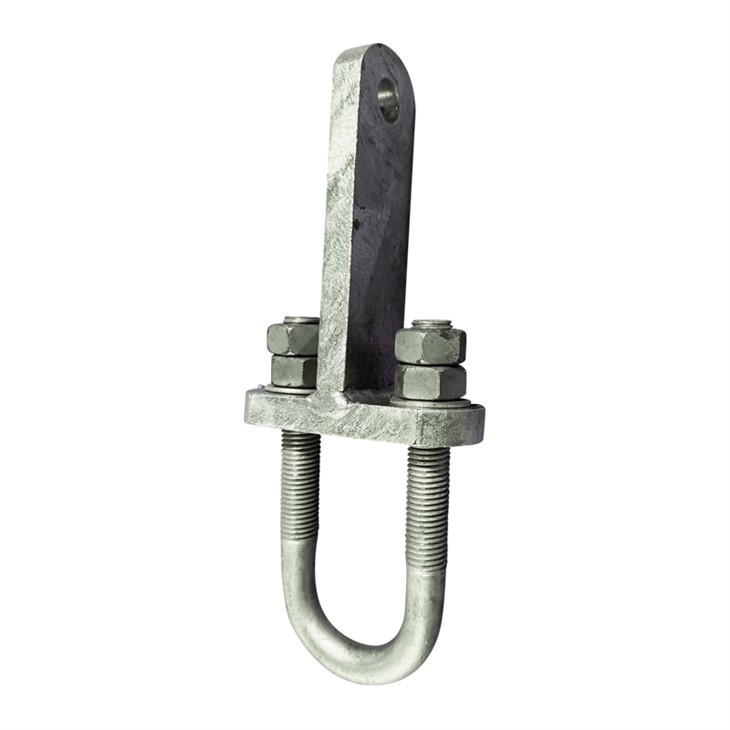
Our Offerings as an Adjusting Clevis Ring Supplier
As a supplier of adjusting clevis rings, we are committed to providing high - quality products with long fatigue lives. We use advanced manufacturing techniques and high - quality materials to ensure the best performance of our clevis rings.
Our DT Adjusting Clevis Ring is a prime example of our dedication to quality. It is designed with optimal geometry to minimize stress concentrations and is made from high - strength alloy steels with excellent fatigue resistance. We also perform rigorous quality control and testing procedures to ensure that each clevis ring meets or exceeds the industry standards.
If you are in need of adjusting clevis rings for your application, we invite you to contact us for procurement and further discussions. Our team of experts can provide you with detailed information about the fatigue life of our products and help you select the most suitable clevis ring for your specific needs.
References
- Dowling, N. E. (2012). Mechanical Behavior of Materials: Engineering Methods for Deformation, Fracture, and Fatigue. Pearson.
- Shigley, J. E., Mischke, C. R., & Budynas, R. G. (2004). Mechanical Engineering Design. McGraw - Hill.
- Suresh, S. (1998). Fatigue of Materials. Cambridge University Press.


