


Hey there! I'm a supplier of adjusting clevis rings, and today I wanna talk about whether adjusting clevis rings can be used in robotic applications.
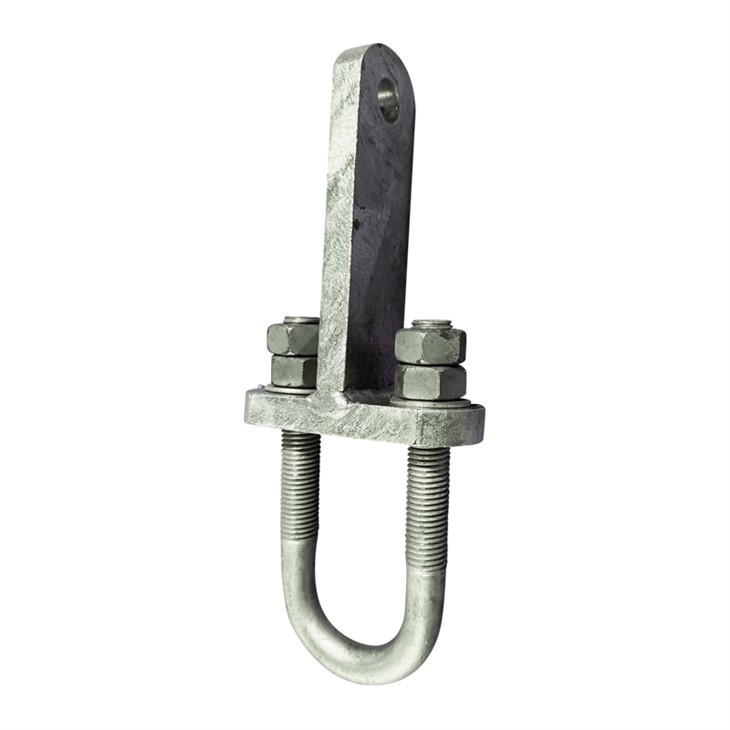
First off, let's quickly cover what adjusting clevis rings are. They're hardware components that have a unique design allowing for easy adjustment. The clevis part is like a U - shaped bracket, and the ring can move and be adjusted according to different needs. They're often used to connect various mechanical parts, providing flexibility and adjustability in the connection.
Advantages in Robotic Applications
1. Precision Adjustment
Robots require a high degree of precision in their movements and operations. Adjusting clevis rings shine in this regard. They can be fine - tuned to ensure that different parts of a robotic arm or other robotic mechanisms are perfectly aligned. For example, in a pick - and - place robot used in a manufacturing line, the links between joints need to be precisely adjusted so that the gripper can accurately pick up objects. An adjusting clevis ring allows for this kind of fine - tuning during the assembly or maintenance process.
2. Flexibility
Robots are designed to perform a variety of tasks. Their working environment and the objects they interact with can change. Adjusting clevis rings offer great flexibility. A robot in a warehouse might need to deal with different sized packages. With the adjustability of the clevis rings in its mechanical structure, the robot can adapt to these size variations by simply adjusting the length or angle of the connected parts. This means that one robot can be used for multiple applications, reducing the need for specialized robots and saving costs.
3. Compensation for Wear and Tear
Over time, the mechanical parts of a robot will experience wear and tear. This can lead to misalignments and reduced performance. Adjusting clevis rings can be adjusted to compensate for this wear. For instance, if the bearings in a robotic joint start to wear, the clevis ring can be adjusted to realign the joint and maintain the robot's accuracy and efficiency. This extends the lifespan of the robot and reduces the frequency of major overhauls.
Challenges When Using in Robotic Applications
1. Load Capacity
Robots often need to handle heavy loads. Different adjusting clevis rings have different load - bearing capacities. In some high - load robotic applications, such as industrial robots used for lifting heavy machinery parts, the load on the clevis rings can be extremely high. We need to ensure that the clevis rings we choose have sufficient strength to withstand these loads. Otherwise, they may deform or break, leading to robot malfunctions.
2. Compatibility with Robotic Systems
Robotic systems are complex and highly integrated. Adjusting clevis rings need to be compatible with other components such as motors, sensors, and control systems. For example, the size and shape of the clevis ring should fit well with the mounting points on the robot's frame. If there's a mismatch, it can cause problems in the mechanical operation and also affect the performance of the entire robotic system.
3. Environmental Factors
Robots can work in a wide range of environments, from clean rooms to harsh industrial settings. In dirty or corrosive environments, the adjusting clevis rings may get damaged. Dirt and debris can get into the moving parts of the clevis rings, preventing smooth adjustment. Corrosive substances can eat away at the material of the rings. So, appropriate material selection and surface treatment are essential when using adjusting clevis rings in such environments.
Our DT Adjusting Clevis Ring
As a supplier, I'm proud to introduce our DT Adjusting Clevis Ring. It's designed with both the advantages and challenges of robotic applications in mind.
1. High - Strength Material
The DT Adjusting Clevis Ring is made of high - quality alloy steel. This material provides excellent strength and durability, making it suitable for high - load robotic applications. It can withstand the stress and strain generated during the robot's operation without deforming easily.
2. Precise Manufacturing
We use advanced manufacturing techniques to ensure the high precision of our DT Adjusting Clevis Ring. Each ring is machined to tight tolerances, guaranteeing smooth adjustment and accurate alignment in robotic systems. This precision helps to improve the overall performance of the robot.
3. Corrosion Resistance
To deal with different environmental factors, our DT Adjusting Clevis Ring undergoes special surface treatment. The surface is coated with a corrosion - resistant layer, which protects the ring from rust and corrosion. This makes it suitable for use in various harsh environments.

Real - World Examples of Usage
Many companies have already started using adjusting clevis rings, including our DT Adjusting Clevis Ring, in their robotic applications.
In the automotive manufacturing industry, robots are used for tasks such as welding, painting, and assembly. These robots need to operate with high precision and reliability. Adjusting clevis rings are used in the joints of these robots to ensure that the robotic arms can move accurately and perform the required tasks. For example, in spot - welding robots, the fine - adjustment of the clevis rings helps to position the welding guns precisely, resulting in high - quality welds.
In the food - processing industry, robots are used for packaging and sorting. The flexibility provided by adjusting clevis rings allows these robots to handle different sizes and shapes of food products. They can adjust the gripping force and position of the grippers to pick up and package the food items gently and efficiently.
Conclusion
So, can adjusting clevis rings be used in robotic applications? The answer is a definite yes. They offer many advantages such as precision adjustment, flexibility, and the ability to compensate for wear and tear. However, we also need to be aware of the challenges like load capacity, compatibility, and environmental factors.
Our company is committed to providing high - quality adjusting clevis rings, like the DT Adjusting Clevis Ring, to meet the needs of various robotic applications. If you're involved in the design, manufacturing, or maintenance of robots and are interested in using adjusting clevis rings, I'd love to talk with you. Reach out to me to discuss your specific requirements and how our products can fit your projects. Let's work together to make your robotic applications more efficient and reliable!
References
- "Robotics: Modelling, Planning and Control" by Bruno Siciliano, Lorenzo Sciavicco, Luigi Villani, and Giuseppe Oriolo.
- "Mechanical Design Handbook" published by McGraw - Hill.


